
IS COVID-19 STILL CONSIDERED DANGEROUS?
By Shea O’Neil 7-5-2024
Yes! It is dangerous in both its initial infection phase as well as its long-term phase.
"COVID-19 is a serious threat to the long-term health and well-being of people and it should not be trivialized." -- Ziyad, Al-Aly, MD, a Washington University clinical epidemiologist and a global leader in long COVID research.

WHAT IF I'M VACCINATED!?
Vaccines have many benefits but fall short as a solution to COVID-19 risks. Vaccinated people can still get infected with COVID-19, spread it to others, and get long-COVID.
A landmark 2022 study shows vaccines give only a modest risk-reduction (15%) for long COVID when comparing vaccinated to unvaccinated individuals. A 2023 study shows 10-12% of cases amongst vaccinated people result in long COVID.
Many have no or limited vaccination protection, such as persons who are not vaccinated due to allergic reactions or other medical contraindications, medical mistrust, avoidance due to risks of developing conditions or other adverse reactions to the vaccines, those with immunosuppression from other conditions or medications, and those who are not up to date with vaccinations. The percent of the US population reporting receipt of the updated 2023-24 COVID-19 vaccine is only 13.7%.
Besides not giving adequate protection from long COVID, vaccines alone cannot slow down the evolution of the SARS-CoV-2 virus and need to be supplemented with preventative measures such as masks and air filtration that significantly reduce transmission in the population. Vaccines cannot keep up with newer variants that evade prior immunity from either infection or vaccination or both. Vaccine’s effectiveness in preventing infection has shown to wane significantly over time.
A recent study shows progressive loss of neutralization (that is loss in the ability to block the entry of the SARS-CoV-2 virus into a cell in order to prevent infection and replication) observed across newer variants, irrespective of vaccine doses. It particularly notes that although the updated XBB.1.5 booster significantly increased titers against newer variants it did NOT show to be effective against JN.1 variants. JN.1 variants and their offshoots are the most prevalent variants in the US currently as of July 2024. Without mitigations, variants will continue to evolve faster than vaccines can keep up with. The result will be more COVID-19 infections and more long COVID cases, and the associated physical, economic, and social costs, as we will see below.
LONG COVID IS not rare, cases are rising, and science is showing chronic, serious, and debilitating outcomes
Long COVID IS NOT RARE-- More than 17.6 million people in the US alone have been diagnosed with long COVID, and more than 65 million globally. Both of those numbers are considered likely underestimates. To put that into perspective, when looking at new cases in the US over the past 4 years, long COVID cases are more than double the amount of new cases of ALL TYPES of cancer combined, with new cancer diagnoses being approximately 8 million over the past 4 years compared to 17.6 million new long COVID cases over the past 4 years.
Long COVID continues to be serious and prevalent amongst all populations. According to a 2023 Nature article, “long Covid incidence is estimated at 10–30% of non-hospitalized cases, 50–70% of hospitalized cases and 10–12% of vaccinated cases …Symptoms can last for years, and particularly in cases of new-onset ME/CFS and dysautonomia are expected to be lifelong. With significant proportions of individuals with long COVID unable to return to work, the scale of newly disabled individuals is contributing to labour shortages. There are currently no validated effective treatments.”
A 2021 systematic review found more than half of COVID-19 infections resulted in long COVID six months after recovery. A 2024 Review of organ damage from COVID and Long COVID: a disease with a spectrum of pathology states that “organ damage might affect over 50 % of post-COVID-19 individuals, and perhaps more in adolescents and children “. A 2023 Nature immunological review concluded “The oncoming burden of long COVID faced by patients, health-care providers, governments and economies is so large as to be unfathomable, which is possibly why minimal high-level planning is currently allocated to it. If 10% of acute infections lead to persistent symptoms, it could be predicted that ~400 million individuals globally are in need of support for long COVID.”
Long COVID can be serious and debilitating, often reported to impact life worse than cancer and other diseases. Intense fatigue and "brain fog" (a term some say is too mild and should be referred to as brain damage) from long-COVID was rated worse than those recovering from stroke, and similar to that of Parkinson's disease. Recovery remains rare. It affects all ages and demographics.
Kids have been shown to be much more susceptible to Omicron infections than prior variants, with resulting damage to their lungs, immune systems, increased risk for diabetes, and systematic review showing a 1 in 5 chance of children getting long COVID. A Lancet study found the long COVID risks to be between 20-30% in children.
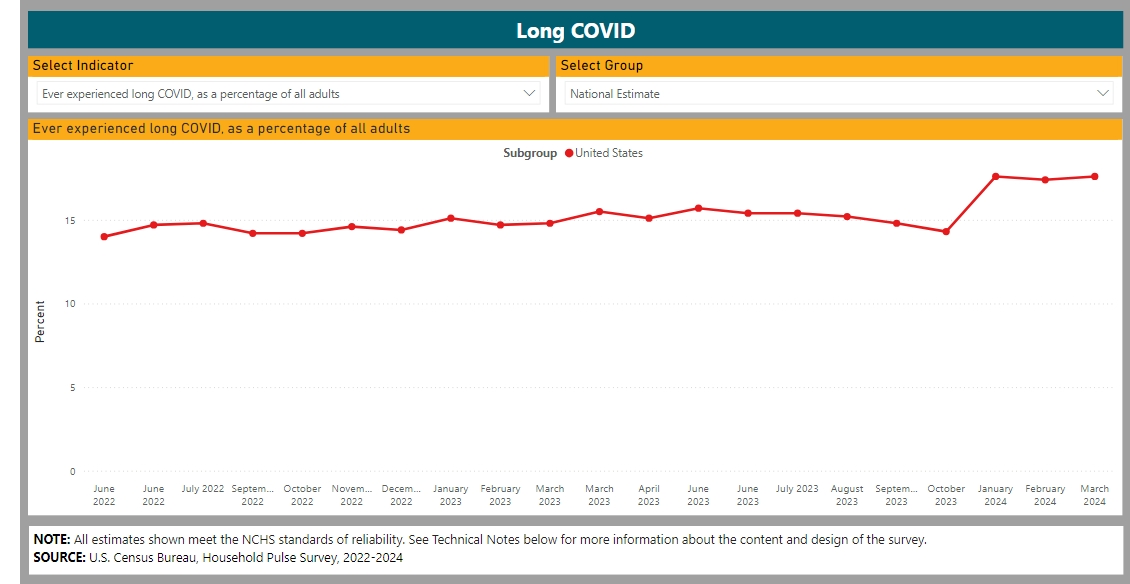
Furthermore, research and data from the CDC's Long COVID - Household Pulse Survey - COVID-19 (cdc.gov) (see chart below) shows that Long COVID is not slowing down, it is rising. Data shows that long COVID is surging in the US, and across the globe.
COVID REINFECTIONs are common, and each reinfection makes LONG COVID MORE LIKELY
COVID-19 is a year-round threat, with exceptionally high surges during times of high travel and indoor gathering without precautions like masking and air filtration to mitigate effects. The spread of newer immune-evasive variants, with nothing to stop them, has made to reinfections common.

Furthermore, studies show risks for serious short- and long-term health problems increase with each reinfection. A 2022 Nature study shows the excess health risks above what might naturally occur increases significantly with every reinfection:

A 2023 study on long COVID among Canadians showed that: "on those who reported ever experiencing long-term symptoms, those who continue to experience these symptoms (58.2%) outnumber those who have reported them resolved (41.8%).
Long COVID causes serious complications, often chronic, with negative health impacts including disability and death. A 2023 Scientific American article stated “the most common, persistent, and disabling symptoms of long COVID are neurological”, later quoting a physician saying, “I now think of COVID as a neurological disease as much as I think of it as a pulmonary disease, and that's definitely true in long COVID.” Although formal guidance on how to record long COVID on death certificates was not released until 2023, CDC data from early 2024 has shown thousands of deaths of US citizens from long COVID.
The effects of long COVID have and are continuing to show up showing up in steep increases in disability rates in the workforce since 2020, as can be seen in the image below:

A 2022 Brookings Report shows that long COVID is keeping over 4 million people out of work so far. This impact is not set up to lessen any time soon, due to the continued spread of COVID-19 and the worsening effect of infections and reinfections on the body.
LONG COVID IS NOT MYSTERIOUS– WE KNOW THE LIKELY CAUSES AND CAN SEE THE EFFECTS CLEARLY
A 2023 study indicates likely causes of long COVID include:
persistent SARS-CoV-2 virus lingers in the body that remain long after the initial acute infection causing cascading effects on multiple organs systems.
reactivation of latent viruses: (viruses that are common but dormant in our bodies) will become activated and cause problems and chronic diseases
chronic inflammation in the organs, blood vessels, and immune system
Inflammatory enzymes that cause inflammation and can manifest into a wide variety of long-term health conditions.
Researchers in a 2024 study found major differences in different long COVID groups, including:
GI (gastro-intestinal) and cognitive long COVID groups with more associations between Epstein–Barr virus reactivation and neurological symptoms, autoantibodies and GI symptoms, as well as finding brain–gut axis disturbances more common in the GI group.
The Cognitive group had more signatures suggestive of neuroinflammation (C1QA), consistent with findings of brain abnormalities on magnetic resonance imaging.
The cardiorespiratory group showed domination of proinflammatory signatures. Lung-specific inflammation was suggested by the association between PCDH1 (an airway epithelial adhesion molecule and cardiorespiratory symptoms.
Fatigue and anxiety/depression groups had signatures that were consistent with those seen in non-COVID depression, suggesting shared mechanisms including associations between markers of myeloid inflammation enhancing immunopathology and fatigue.
In February 2024, researchers in Dublin, Ireland published a study in Nature Neuroscience that found that:
"sustained systemic inflammation and persistent localized blood–brain barrier (BBB) dysfunction is a key feature of long COVID-associated brain fog."
blood vessel inflammation and blood clotting issues resulting in microbleeds in the brain.
inflammatory biomarkers suggesting immunological dysfunction.
structural brain damages in regions involved in "brain fog"--an umbrella term for the fatigue, memory, and cognitive problems described by many with long COVID.
brain abnormalities to be similar to patients suffering from neurological diseases including epilepsy, traumatic brain injury, and schizophrenia, and
other biomarkers similar to those implicated in the pathogenesis of chronic fatigue syndrome, a condition with clinical similarities to long COVID. The researchers found no difference in age in this study, again affirming that long COVID is happening to people of all different ages.
A 2024 Lancet study showed that cognitive symptoms and brain abnormalities were still present 2 years after infection. Another 2024 study found that a year after COVID infection, 7% of children still experienced cognitive problems.
One thing is certain, we know enough already about COVID-19 to know it is causing serious, significant, wide-ranging effects on health, and no subgroup has been found to be immune from those risks: every age, class, race, religion, and health status are at risk, and the only way to prevent long COVID currently is to not get infected to begin with.
THE 2024 us department of defense report
The US Department of Homeland Security released a COVID-19 Report to the public in January 2024. Some key admittance included in the report:
INFECTIVITY : Decreased threshold for infectivity has been modeled in newer variants, suggesting SARS-CoV-2 infection can occur from 100 virus copies of Omicron variant.
TRANSMISSIBILITY: As of 1/22/2024, COVID-19 has caused at least 774,075,242 infections and 7,012,986 deaths globally. In the United States 1,169,666 deaths have been confirmed. Cases and fatalities are likely underestimated.
SEVERITY: COVID-19 is more severe than seasonal influenza, evidenced by higher intensive care unit (ICU) admission and mortality rates. In the U.S., 29-34% of hospitalized patients required ICU admission, and 12.6-13.6% died from COVID-19. COVID-19 also causes pneumonia, cardiac injury, kidney damage, pancreatitis, arrhythmia, sepsis, stroke, respiratory complications, and shock. SARS-CoV-2 weakens blood vessels in the lungs and is associated with hyperactive platelets, leading to ARDS. Clotting affects multiple organs and is present in 15-27% of cases.
LONG-TERM EFFECTS: Long COVID is a multisystemic illness, where symptoms linger for weeks, months, or years after initial diagnosis of COVID-19. The incidence is estimated at 10-30% for non-hospitalized cases, 50-70% for hospitalized cases, and 10-12% for vaccinated cases. The incidence rate of pediatric long COVID is still uncertain. Due to small study sizes and inconsistent collection and analysis methods, the reported incidence rate can vary from approximately 25% to <5%. A study determined that age, sex, and vaccination status could not be used to predict the development of long COVID.
DISEASE CONTROL: NPIs (Non-pharmaceutical Interventions) should be implemented in conjunction with vaccination. NPIs and vaccines work synergistically to reduce disease burden, and both are needed when vaccine coverage rates are low. Early in the pandemic, NPIs were responsible for a 35% reduction in transmission, while vaccinations were responsible for a 38% reduction in transmission; however, when NPIs were combined with vaccination it resulted in a 53% reduction in transmission. Modeling shows that NPIs can reduce the likelihood of vaccine-resistant variant emergence, as the simulated emergence of vaccine-resistant strains was highest when vaccination levels were high (60%), but transmission was uncontrolled. Researchers have proposed an Omicron variant model to provide insights to coordinate NPIs and vaccination, where NPIs become more important to control transmission as the vaccine efficacy is reduced due to the emergence of new variants.
PREVENTATIVE MEASURES: Face masks inhibit transmission by both reducing the number of exhaled particles from infectious individuals, as well as reducing the number of inhaled particles when worn by uninfected individuals. A large analysis across 56 countries found that mask wearing reduced the mean transmission rate by 19%. In a study of K-12 school districts across nine states, those with universal masking policies reported 3.6 times fewer secondary infections than those with optional masking policies. Reducing capacity at crowded indoor locations, increasing indoor air flow rates, adding portable air cleaners, and wearing masks may reduce indoor transmission. Aerosol infection risk is not uniform in indoor environments, and can be greatly impacted by patterns of ventilation.
THE 2024 senate hearing on long covid
On January 18th, the Senate Health, Education, Labor, and Pensions (HELP) Committee held a hearing titled "Addressing Long COVID: Advancing Research and Improving Patient Care." Here are the highlights:
Senator Sanders began the hearing stating long COVID affects all age groups and backgrounds. The strange and debilitating symptoms include serious neurological and cardiovascular effects, and that these can last weeks, months, and years, often becoming chronic. With no FDA approved treatments for long COVID, Sanders contends, there is an urgent need for action. Sanders goes on to state that long COVID is not a minor inconvenience but can affect people's ability to work, care for families, and live full lives. Currently more than 16 million in the US have long COVID, more than 4 million are out of work because of it, and it costs us more than $170 billion dollars a year.
Senator Markey called the numbers "staggering", stating according to NIH, “out of the people who have had COVID, 22-38% of them are experiencing long COVID, and that may be an underestimation”. He went on to say people “should be masking, they should be getting vaccinated, because there is a high probability they will have long COVID”, and that “it is imperative that we provide funding for research”.
The witnesses at the hearing– patients and caretakers of those with long COVID– spoke of the difficulties accessing care and treatments due to professional ignorance on long COVID, even after tests showing real physical damage were often brushed aside or dismissed as just being anxious. They spoke of the need to include patient voices, lived experiences, and continuing education in the process of expanding education to medical professionals.
Senator Romney, who has a family member with long COVID, acknowledged the severity and long-term nature of symptoms including micro blood clots and the associated aches, pains, and fatigue. He asked with frustration, "What are we doing to prevent it?"
Senator Murray acknowledged the need to improve public health infrastructure as well as increase public awareness to help with prevention. Murray also inquired on the challenges navigating our healthcare system and the need at the federal level to expand access to quality care for long COVID patients. Senator Hassan said long COVID patients are often spending $9,000 annually for out of pocket costs, and that medical providers who treat long COVID have huge waits already. Senator Braun said, “No one should go broke in this country because they get sick or have an accident”, with a reception of applause from the audience (many of whom were wearing high quality masks).
There was also an expert testimony, in which lead doctors, scientists, and researchers gave input– including Dr. Hawkins, an ICU doctor turned long COVID clinical trial runner, and Dr. Al-Aly, a well-renowned physician-scientist whose works have led the research on long COVID.
We have “zero treatments” approved for long COVID Al-Aly said, as he wore a well-fitted respirator mask, “Now you should be asking me how we prevent long COVID, and the only way to prevent long COVID is to prevent COVID infection in the first place”.
He goes on to stress how we do not have vaccines that block infections right now, and we need them to be developed and to last. But we do have ventilation and filtration technologies we can put into place to reduce risks.
He continues by saying, “Acute infection can cause long-term disease, it can end up disabling people,” warning, “Even if people managed to emerge unscathed after the first infection, they may get long COVID after reinfection.” Al-Aly testified to the senators: “The risks of getting long COVID after reinfection are not known to the general public”, which hinders their ability to give a response that matches the severity of the problem.
IF IT HASN'T GOTTEN ME BY NOW, DOESN'T THAT MEAN I'M IN THE CLEAR?
If you haven't had any long-term effects after your first infection, and/or if your first infection was not severe, it does not mean you will not in your second, third, or fourth. Most people suffering from long COVID had mild initial infections. As we have seen above, initial (aka acute) infection risks are only a small part of COVID-19 infections, and health risks continue long after this time period. Because long COVID symptoms often do not appear until months after infection, many fail to connect their long COVID symptoms to their initial COVID infection-- which may have even been asymptomatic. Research shows that asymptomatic infections are not only transmissible to other, but they can also result in long COVID. A 2021 study showed one-fifth of people with asymptomatic COVID-19 infections end up developing long-lasting symptoms.
There is no long-term immunity to COVID-19, and reinfections with new variants are common whether you are vaccinated or not. Infection-gained immunity has proven to be short-lived. A recent Lancet study shows that reinfections are actually more likely AFTER prior Omicron infection (not less). There is also a growing body of research on long-term COVID-caused immune damage.
KNOW YOUR RISKS: SHORT-, MEDIUM-, AND LONG-TERM
One cannot truly make a decision about what to do in regard to COVID-19 without being informed of the risks involved, from immediate to long-term.
We know COVID-19 risks move well past the acute infection-- the term for the initial "sick" phase that now is resulting in less deaths and hospitalizations than earlier in the pandemic, but still is killing over 1,000 Americans each week, even in Spring 2024. The COVID-19 death rate is at least 4 times higher than influenza. It has killed more than 1.2 million people in the United States and more than 7 million world-wide. To put it in context, 1.2 million is the same amount of military fatalities in all major wars from 1775 to 2024. At this rate, we will run out of space on the COVID memorial wall soon just considering deaths during the acute phase of infection alone!
However, it isn't even the hospitalization and death rate in the acute infection that is our most likely risk (even though it IS a concern, as more than half of the US population is considered higher risk for severe outcome from COVID-19).
Yet, there is an even greater chance that this will affect our long-term health in serious, often chronic and disabling ways, and those risks pertain to ALL people, whether one is considered higher risk in the acute infection phase of the disease or not. A recent study shows that a quarter of infections result in SARS-CoV-2 virus persisting in people's blood, and many studies show the virus can wreak havoc on the body and its systems, with serious and even deadly health effects.
Heart Attack and Stroke Risks In the Short and Long-Term
Some of the most serious and deadly risks are related to heart attack and stroke risks in all ages. A 2023 study in Nature Cardiovascular Research shows the virus infects coronary arteries, causing plaque buildup to become inflamed and break off, which can then lead to a heart attack. A 2022 study confirmed stroke risks were heightened in younger and healthier people, including those with seemingly mild acute infections. COVID-19 infection more than doubles heart attack and stroke risks for up to a year after infection. They are exceptionally high in the weeks after infection. A 2021 Lancet study shows heart attack risks are 3-8 times higher, and strokes caused by blood clots 3-6 times higher, the weeks after COVID infection. Vaccination helps reduce some of these effects, while showing no effect on others.
A study on the cardiac effects of COVID-19 shows heart effects at four different time windows after infection: 0–30 days (namely the acute phase), AND 31–90 days, 91–180 days and 181–365+ days (these last three comprise the post-acute phase). The researchers found that although some of the heart risks during the acute phase were lessened by vaccination, most of the long-term risks were heightened after COVID infection whether you were vaccinated or not. They found:
a substantial reduction of risk (45–81%) for thromboembolic and cardiac events in the acute phase of COVID-19 associated with vaccination.
A lesser reduction (24-58%) for the risks for post-acute COVID-19 VTE (venous thromboembolism), ATE (arterial thrombosis/ thromboembolism), and HF (heart failure).
No reduced risk for post-COVID-19 MP (myocarditis/pericarditis) and VACA (ventricular arrhythmia/cardiac arrest) in vaccinated people was seen after the acute phase.

Figure Above shows how researchers often look at different risks of COVID during different time periods of the acute and post-acute phase.
Long COVID heart attack and stroke risks are thus a problem whether you are vaccinated or not, and are far worse than long-term risks after other viral infections, such as the flu. Even though scientists are learning more that flu can also cause inflammation that increases heart and stroke risks, research shows that SARS-CoV-2 virus does so at rates more than 7 times higher than after the flu.
And, the long-term effects of COVID-19 infection can move well beyond heart attack and stroke risks.
Other Long-Term Risks and How COVID Causes Them
COVID-19 infection can cause long-term gastrointestinal problems, multi-organ impairment, abnormalities of blood vessels and coagulation, mitochondrial cell dysfunction, functional impairment and fatigue, muscle abnormalities, development of allergic diseases and asthma, immune dysregulation, detrimental neurological impacts (including brain cell fusion, depression, and cognitive impacts), as well as many other post-acute infection health effects (all under the umbrella terms "long COVID" or "PASC" (Post-Acute Sequelae of COVID-19).
Because long COVID is so diverse depending on which part(s) of the body are affected, it is now being divided into (sometimes overlapping) subtypes, based on its cause and/or the parts of the body it affects. By defining subtypes, healthcare professionals and researchers may be better able to identify long COVID, and/or develop treatments. But right now, there are no approved treatments or cures for long COVID.
protecting oneself is not a solo act
Respirators, like N95, KF94, KN95, or better, along with cleaning the air, are non-invasive ways to filter out the SARS-CoV-2 virus from the air, making it much more difficult for it to infect you. And yes, we can filter out the virus. We have plenty of studies and real-life examples on the efficacy of N95 masks in filtering out aerosols like those the SARS-CoV-2 virus travels on when it enters your nose and mouth, and many industries use respirator masks, from firefighters fighting wildfire smoke, to people spraying pesticides, to carpenters using power saws to cut wood. They can capture tiny particles INCLUDING those that the virus travels on.
Wearing a respirator mask (N95, KN95, KF94, or better) as opposed to a surgical mask makes a huge difference. In a real world study on the efficacy of respirator masks in a COVID ward, when surgical masks were replaced with FFP3 (N95) respirators for nurses on a COVID-19 ward, infection risk declined by 52%-100%. It has been stated for decades that surgical masks are not good for things like wildfire smoke (aerosols), and to wear respirator masks. And, unlike early on in the pandemic, respirator masks are widely available now in most countries, although more efforts should be made to make them accessible world-wide to all people.
A pre-COVID study showed respirator masks significantly reduced infections with airborne pathogens, also showing continuous use of respirators to be more effective than intermittent use.
A 2021 report published in Science concludes face masks effectively limit the probability of SARS CoV-2 transmission, while also acknowledging that mask efficacy depends on airborne viral load, adequate fit and filtration, and other protections used.
Masks work better at lower viral densities. Respirator masks sometimes may have gaps, leaks, or times where we take the mask off for various reasons. Fit test kits can be expensive, and most people are wearing non-fit tested masks. Even just one infected individual can expel a high amount of virus into the air. Having more people masking, reducing the number of infectious people in a space, adding enhanced filtration of the air, reducing the density of people in a space, and decreasing time in higher risk situations that are lacking in any one of these areas, are all important.
In the image below from Sanford Health, you can visualize how the risks of COVID-19 infection and transmission decrease with more people masking. When the non-infected person is the only one wearing a mask, the chance for infection is still high:

A 2021 PNAS study found that when:
only the non-infected person wears a surgical face mask, with an infectious person speaking at a distance of six feet, the risk for infection reaches 90% after 30 minutes.
With only the non-infected person wearing an N95 respirator mask in the same situation, infection risk remains at approximately 20% after one hour.
When neither wears a mask the risk of the infectious person transmitting to the non-infected is 90% after only a few minutes.
However, when both wear a well-fitting N95 mask, infection risk is only 0.4% after an hour. (Note: newer variants are even more infectious than the variants that were around when this study was done, meaning time to infectious dose may be less than these estimates).
It is really important for us to advocate for others to mask along with you when sharing air-- ESPECIALLY in spaces we have to spend more than an hour of time in. Even 20% risk of getting COVID-19 is too high, and that is just for 1 hour of me one-way masking, using the estimate from the study above (that was made with LESS contagious variants than what is circulating now-- meaning the risk is likely higher than 20% after 1 hour of one-way N95 masked at 6 feet distance exposure).
It is also important to keep the mask on. According to a 2023 study, transmission can happen in as little time as 20 seconds to 4 minutes. A Nature study from December 2023 also showed transmission can happen in as little as a few minutes in normal conditions. If one person has to unmask for a quick drink of water, it is really helpful when others are wearing a mask and not in close proximity to the unmasked person. Spreading out outside to eat, or making arrangements to eat at home instead of in indoor or crowded outdoor settings can be helpful.
Adding infection prevention strategies to incorporate universal masking and enhanced air filtration makes huge a difference. A 2021 study showed universal masking is significantly better than one-way masking. And research shows adding mask requirements reduces the spread of COVID-19.
Wearing masks will advance our fight against COVID-19 by reducing infections and slowing down its evolution, making the vaccines and treatments we do have more effective for longer periods of time.
A 2022 research article found that the mean observed level of mask wearing corresponded to a 19% decrease in the reproduction number (a measurement of how many people each infected person spreads COVID-19 to) , and stated that “the evidence that mass mask wearing reduces transmission implies that mandates (and other mask-promotion policies) may be effective against COVID-19 if and when they improve or increase the use of masks.” Adding increased air filtration also makes a difference. A 2022 study published in the Journal of Infectious Diseases found that fit-tested N95 mask combined with a portable HEPA filtration system offers the best protection against viral particles in the air.
Multiple Layers and Clear Public Health Messaging
We give more information on these all of these topics in our Multiple Layers: A Step Beyond the Swiss Cheese Model, where we also discuss the importance of clear public health messaging, such as the importance of openly acknowledging and expressing the risks of COVID-19 and long COVID, the need to push for political action, and the need for policies that prioritize public health over short-term economic interests. We also talk about the important responsibility of each individual and organization to develop effective strategies on how to prevent COVID-19 in our homes, schools, workspaces, and communities, and take a look at how to properly use the tools we have to prevent infection.
We all deserve to be given the information and tools we need to keep ourselves and others safe, while also being social. Creating that opportunity is what this website is all about.
So, in short, is COVID still dangerous? Yes! Yes, it is.
Can we do something about it? Yes, we can.